
At Digital Construction Week, we’re always on the lookout for innovation that pushes the boundaries of what’s possible in the built environment. That’s why we’re excited to share this guest blog from Sagal Rooble at Chetwoods. As an industry advisor on Project RESTOR – a pioneering collaboration with the Universities of Cambridge and Birmingham – Chetwoods is helping to scale the reuse of structural steel through cutting-edge digital technologies. From machine learning and non-destructive testing to generative design and BIM, discover how RESTOR is helping shape a regenerative, circular future for construction.
At Chetwoods, we believe architecture must go beyond sustainability to actively restore, regenerate, and enrich our environment. That’s why Chetwoods Works team is proud to be an industry advisor on Project RESTOR, a pioneering three-year collaboration between the Universities of Cambridge and Birmingham that is transforming how we approach one of construction’s most carbon-intensive materials: structural steel.
Project RESTOR addresses one of the biggest untapped opportunities in construction: reusing structural steel at scale. Currently, only about 15% of structural steel is reused – RESTOR aims to push that figure beyond 50%. Through a powerful blend of cutting-edge digital technologies, RESTOR is removing longstanding barriers to reuse, making it not only viable but preferable.
Rather than treating reused materials as a constraint, the project leverages them as opportunities – reducing demand for new steel, cutting embodied carbon, and supporting the UK’s transition to a circular economy.
Innovation as enabler
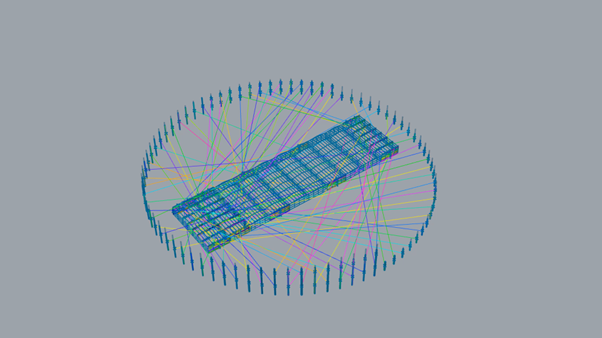
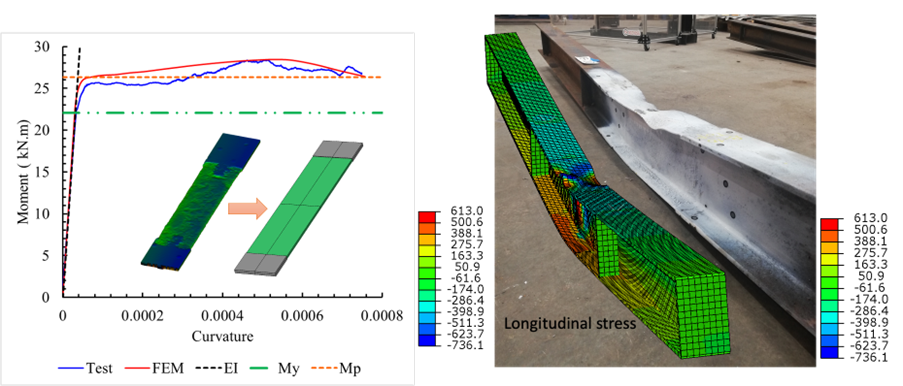
This shift is enabled by a suite of advanced technologies. Non-destructive testing assesses steel quality without damage, while machine learning models optimise reuse scenarios based on structural performance and carbon efficiency. Digital twins and Building Information Modelling (BIM) create detailed, accurate representations of steel components, ensuring they can be safely and effectively integrated into new construction.
At the heart of this system is a generative design tool that allows architects and engineers to work with reused steel from the earliest design stages, streamlining reuse and ensuring material efficiency.
The digital tools are being developed to be accessible and adaptable, supporting uptake across different types and scales of projects.
A blueprint for circular construction
Beyond its environmental impact, RESTOR is helping redefine how the construction industry collaborates and innovates. What makes it a true game changer is its integration of reuse into the design process from the outset. One of the project’s key insights is the value of early involvement from structural and digital engineers: when reuse is planned from the start, it enhances rather than restricts design potential.
The partnership between academia, architects, and engineers is fostering a culture of shared knowledge and confidence in reuse strategies. This joined-up thinking will be essential in shaping future regulatory frameworks and embedding circular principles more deeply into standard practice.
Looking forward
RESTOR has shown that reuse is not only feasible but preferable – technically, economically, and environmentally. Sustained industry engagement and regulatory evolution will be vital to maintaining momentum. With the right mindset and methodologies, we can build a future where resources are continually reimagined, carbon emissions are drastically reduced, and construction becomes a regenerative force.
At Chetwoods, we remain committed to driving this change. Through our role in RESTOR, we’re helping to shape a built environment that is not only smarter and more efficient, but restorative by design – serving the needs of people, the planet, and the future.
Sagal is speaking at Digital Construction Week! Check out their session here.
Have you got your ticket? Register free here.
About the Author
Sagal Rooble, Digital Strategy Coordinator – Chetwoods Works
Chetwoods Works team is driving a cultural shift towards smarter, more efficient, and sustainable construction by championing BIM, AI, digital twins, and smart technologies, redefining the future of project design, delivery, and operation.