
By Naomi Gilford, AtkinsRéalis
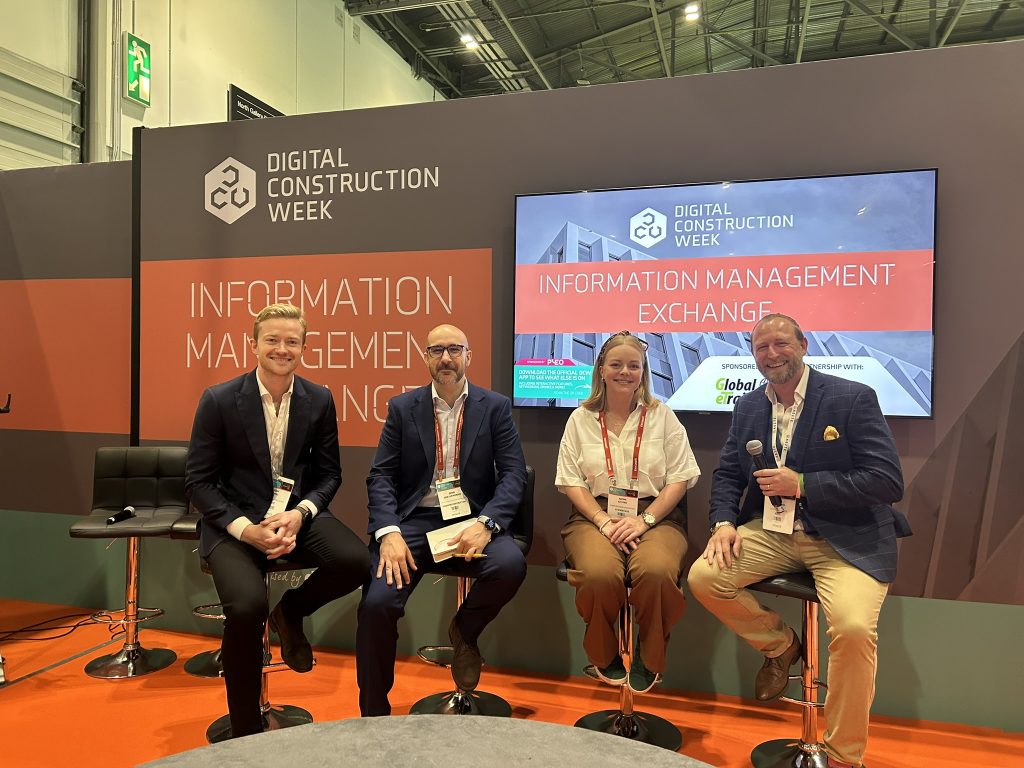
At this year’s Digital Construction Week, I had the opportunity to speak on a panel exploring the evolving role of the common data environment (CDE). As digital transformation accelerates across the built environment, the CDE remains a critical, yet often misunderstood, pillar of project delivery. This article reflects on the key themes from our discussion, the challenges we face as an industry, and the opportunities ahead.
To me, a CDE is a structured process – not just a platform – for managing and sharing project information. It creates a single source of truth, enabling teams to make informed decisions with the right people at the right time. It’s not one tool, it’s an ecosystem that supports collaboration, consistency, and trust across the entire project lifecycle.
While the principles of a CDE remain consistent, the term itself has become clouded. With the rise of digital platforms and a more tech-savvy workforce, we’re seeing a much broader interpretation of what qualifies as a CDE. Some tools are full ecosystems; others are little more than file-sharing services. Yet all are being labelled the same.
This saturation creates confusion. When everything is a CDE, nothing really is. Without a shared understanding, we risk misalignment between teams, inconsistent data practices, and inefficiencies in delivery.
ISO 19650 provides the structure and language needed to manage information consistently across disciplines and organisations. Especially on large, complex projects, where thousands of professionals may rotate in and out, ISO 19650 ensures continuity and clarity.
ISO 19650 also acts as a leveller. Whether you’re a Tier 1 contractor or a small consultancy, the standard offers a roadmap to high-quality information management that supports collaboration and compliance.
Perhaps the most important change we need is cultural. The CDE should not be seen as a compliance burden but as a collaborative enabler. That means designing systems that are intuitive and user-friendly, and investing in industry-wide training – not just bespoke project onboarding.
By improving digital literacy and aligning on shared definitions, we can unlock the full value of the CDE and deliver better outcomes across the built environment.
In the future, I expect the CDE to evolve from a static repository into a dynamic, integrated environment. Future CDEs will connect data across the full asset lifecycle, from design and construction to operation and maintenance.
Interoperability will be key. As open data standards mature, CDEs will need to seamlessly exchange information across platforms and sectors. AI and automation will also play a growing role, helping teams surface insights and make decisions in real time.
But for these technologies to succeed, the underlying data must be structured and trustworthy – again reinforcing the importance of standards like ISO 19650.
One of the most exciting opportunities I discussed is using the CDE to support digital plan of works (DPOW). When implemented effectively, the CDE can help break down silos between the PMO, delivery teams, planners, and designers, providing real-time insights to project leaders and developers about exactly where a programme stands.
But this raises a critical question: why are we still asking designers and construction professionals to build these systems? At AtkinsRéalis, we’ve observed a growing need to bring in enterprise IT and solution architects to design and structure CDEs. These professionals are trained to build scalable, integrated digital environments – something that’s becoming essential as project complexity increases.
This is an emerging trend that could reshape how we approach digital delivery, moving from discipline-led to architecture-led CDE design.
Digital Construction Week highlighted just how far we’ve come in embracing digital tools, but also how much clarity and coordination is still needed. The common data environment is not just a technical solution; it’s a cultural and strategic one.
As we look to the future, we must move beyond discipline-led approaches and bring in enterprise IT and solution architects to design CDEs that are scalable, interoperable, and truly integrated. By redefining the CDE as a collaborative, structured process – supported by standards, designed by the right expertise, and embraced across disciplines – we can move beyond compliance and towards true digital transformation in construction.
About the author
Naomi Gilford is a Senior Digital Tools Specialist with a background in leading information management on major infrastructure projects. She specialises in information management, digital strategy, and enabling collaborative project environments. Naomi is passionate about driving clarity and consistency in the use of digital tools across the construction industry.
About AtkinsRéalis
AtkinsRéalis is a world-leading design, engineering, and project management organisation. With a strong heritage in infrastructure and a growing focus on digital transformation, the company delivers innovative solutions across sectors including transportation, energy, and the built environment. AtkinsRéalis is committed to shaping smarter, more sustainable infrastructure by integrating advanced technologies, data-driven insights, and multidisciplinary expertise.