AI and Digital Twins: Are we ready for self-managing buildings?
Digital Twins are moving rapidly from experimental tools into core operational infrastructure for the built environment. They are evolving into a decision-making platform that connects models, data and live systems across entire estates. Alongside this shift, artificial intelligence is accelerating expectations even further. Increasingly, the conversation is no longer about insight alone, but about automation. Due to tight FM budgets and smaller teams, clients are asking not just what their buildings are doing, but whether their buildings can begin to manage themselves.
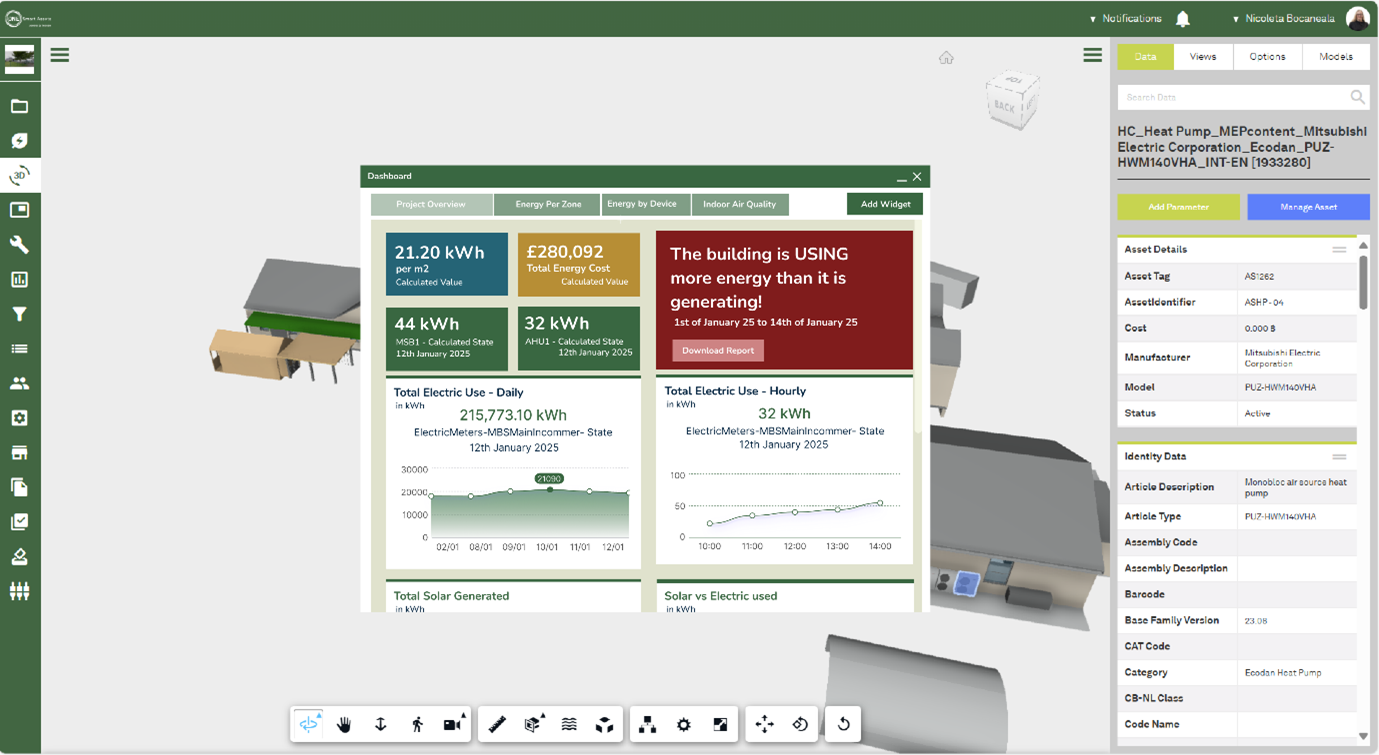
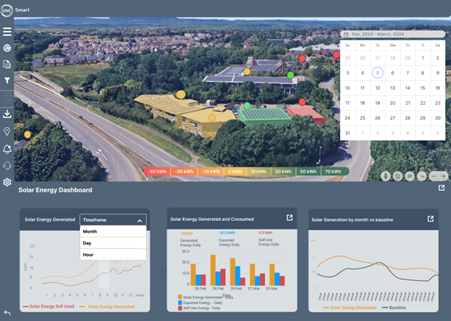
At One Creative Environments (ONE), the Digital Estates team configures digital twins to optimise the management of large and complex estates, and over the past year we have seen a marked rise in organisations eager to apply AI within these environments. The ambition is understandable. Automated control promises lower carbon, reduced cost, improved reliability and a step change in how estates are operated. Heating systems that continuously optimise against occupancy and weather, lighting that anticipates use before people arrive, logistics that dynamically reroute across campuses, and maintenance plans that adapt in real time based on predicted failure rather than historic schedules all point towards a future of genuinely intelligent infrastructure.
In many ways this represents the natural next phase of the digital twin. Most implementations today focus on visibility and diagnosis. They connect BIM, asset registers, condition surveys, maintenance information, and sensor data to reveal performance gaps and inefficiencies. AI extends this capability by learning from patterns across vast datasets and projecting future behaviour. The real power emerges when those predictions are linked directly to action. A twin that not only identifies an emerging problem, but adjusts plant settings, reschedules maintenance or reallocates space before the issue materialises, moves from reporting tool to operational partner.
The benefits are compelling. Energy systems can respond continuously to real occupancy rather than static assumptions, carbon performance can be optimised hour by hour rather than reviewed annually, and predictive maintenance can replace reactive call outs and over cautious inspection regimes, which in turn extends asset life and reduces disruption. For large estates facing regulatory pressure, ageing infrastructure and constrained budgets, automation offers a route to resilience that traditional approaches struggle to deliver.
Yet the very characteristics that make AI powerful also introduce new risks. Buildings are not abstract digital products. They affect comfort, safety, statutory compliance and business continuity. When an algorithm adjusts ventilation rates, defers maintenance or changes operating hours, the consequences are physical and immediate. The danger is not simply technical failure, but erosion of accountability, and in highly automated environments it can become unclear who owns a decision, the system that executed it, the model that recommended it, the software supplier that built it, or the manager who approved the configuration months earlier.
Also, data quality remains a fundamental constraint. AI is only as reliable as the information it learns from. In many estates, asset registers are incomplete, condition surveys are inconsistent and sensors drift out of calibration. Automation layered on uncertain foundations can amplify error rather than eliminate it. There are also governance and security considerations. A digital twin that controls operational systems becomes part of the operational technology estate, with corresponding exposure to cyber risk and system resilience challenges.
For these reasons, the future of AI in digital twins is unlikely to be fully autonomous. The more credible and sustainable direction is human in the loop automation, where intelligence supports rather than replaces professional judgement. In this model, AI analyses, predicts and proposes, but people remain accountable for approval, oversight and exception handling. Automation is applied selectively, with defined limits, audit trails and the ability to intervene.
This is increasingly the approach that ONE adopts for digital estates. Low risk, high frequency adjustments such as lighting optimisation or temperature management can be automated within agreed tolerances. Higher impact decisions, particularly those affecting compliance, safety or asset life, remain recommendation-based and require human authorisation. Governance is designed into the twin from the outset, with clear ownership of automated rules, transparent logging of actions, and regular review and retraining aligned with operational change.
The objective is not to slow innovation, but to build trust. Building owners and operators must be confident that automation is explainable, controllable and aligned with organisational responsibility. Without that confidence, the most advanced intelligence will remain unused or actively resisted.
The industry is now at an inflection point. Digital twins are becoming mainstream, and AI capabilities are maturing rapidly. The temptation is to pursue autonomy as an end in itself, but the built environment operates on long time horizons, regulated obligations and low tolerance for uncontrolled experimentation. The organisations that succeed will not be those that automate fastest, but those that automate most deliberately.
The most effective digital twins of the future will not remove people from the system, they will create intelligent partnerships between human expertise and machine intelligence, combining speed with accountability and prediction with professional judgement. In doing so, they will not only optimise buildings, but redefine how estates are governed, sustained and trusted in an increasingly automated world.

About the author
Vicki Reynolds | Technical Director – Digital Estates, One Creative Environments
During Vicki’s 15 year career in construction, she has held roles in information management, BIM management and digital construction across several high-profile projects, delivering digital solutions, implementing new technology, and upskilling individuals and organisations.
A passionate member of the construction community both locally and globally, Vicki has written and delivered workshops and lectures on digital construction and information management for audiences in the UK, Ireland, Germany, the Netherlands, Canada, India, and China. She is a NIMA ambassador, a member of the CIOB’s Digital Advisory panel, a founding member of the Digital Twin Fan Club, and part of the Women in BIM executive management team. Vicki is also the Academic Director for the Zigurat Global Masters in BIM Management (English edition).
Registration for Digital Construction Week 2026 is now open! Book your free ticket.