
At DCW, IFS and one of their customers McLaren presented the results of a global construction industry survey conducted by an independent company called Censuswide Research. The survey interviewed 825 respondents across 14 countries.
The research findings answer the questions: Why change, why now? and help to get a pulse on the rapidly evolving sector so that companies can prepare for success.
A clear message came back from the survey. The industry faces many challenges. And in terms of digital maturity, the construction industry must play catch-up.
The level of digital maturity is generally low in the sector, but there is a rapid shift happening as companies are now recognising that investing in a digital strategy is no longer optional but critical to keep their businesses in control. Legacy ERP upgrades will also ensure sustainable and controlled profitable revenue growth. Lastly, the need for better data and information management and one version of the truth is critical to take advantage of the latest innovations, such as Industrial AI.
Here are the main takeaways from the survey that explore how to overcome challenges, increase business value, and prioritize construction ERP technology investments.
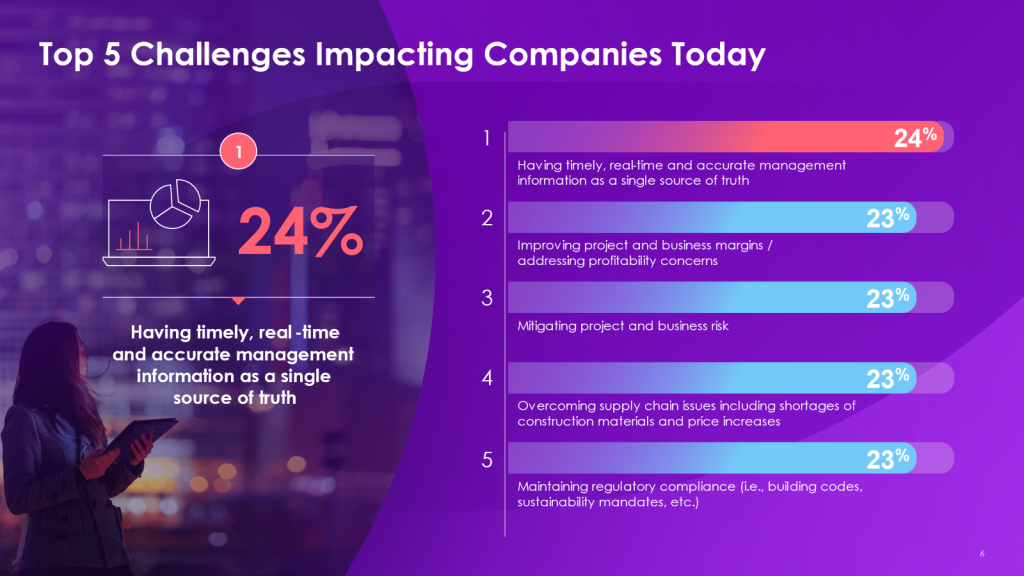
Top 5 challenges
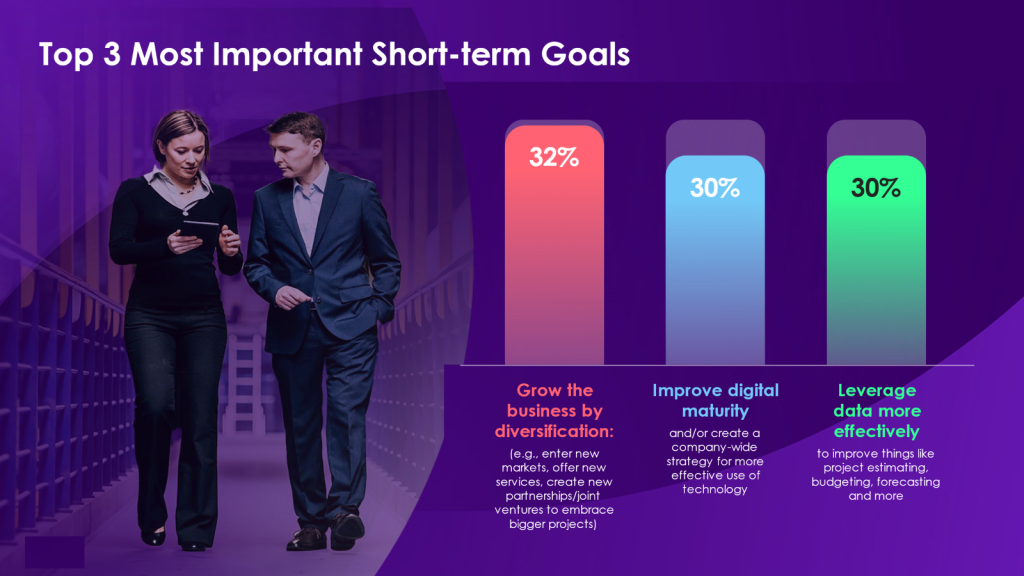
Top 3 short term goals
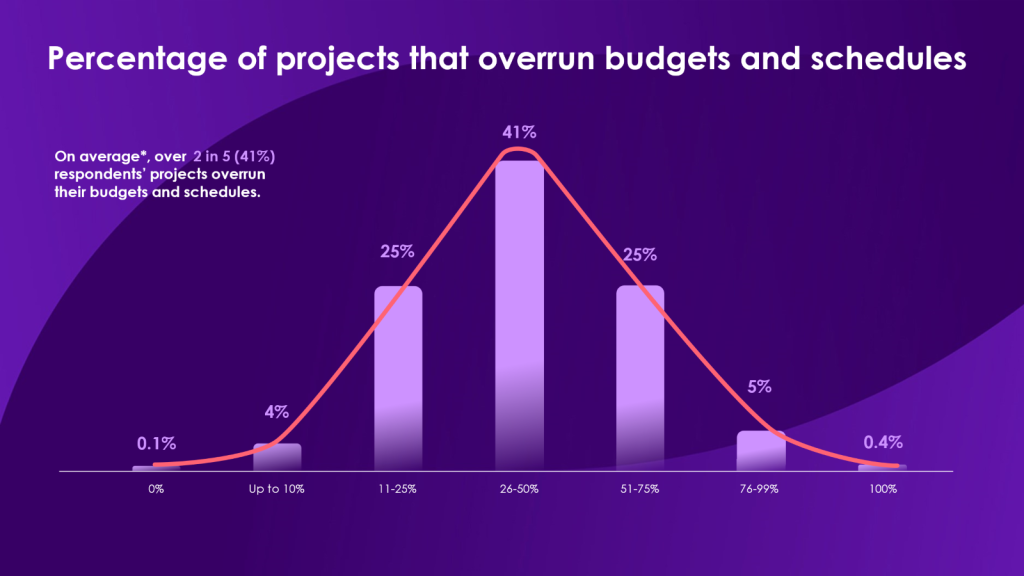
Project performance benchmarks
The top three biggest challenges—lack of accurate data, project and business margins, and project risk—are all reinforced in the results of our project performance benchmarking.
In essence, most project are late and over budget.
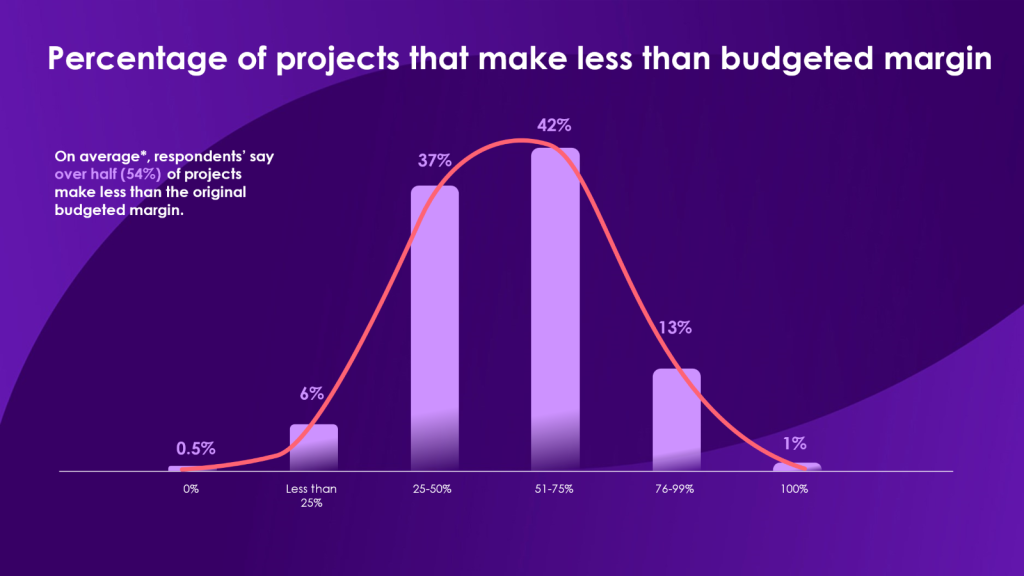
Project margin control is one of the biggest challenge the industry faces. From a technology solution perspective, all of our research findings point to the need for a digital Enterprise Resource Planning (ERP) platform to provide accurate project visibility at every stage.
Technology adoption
The research findings also reveal how the construction industry is prioritizing technology investments to embrace new trends.
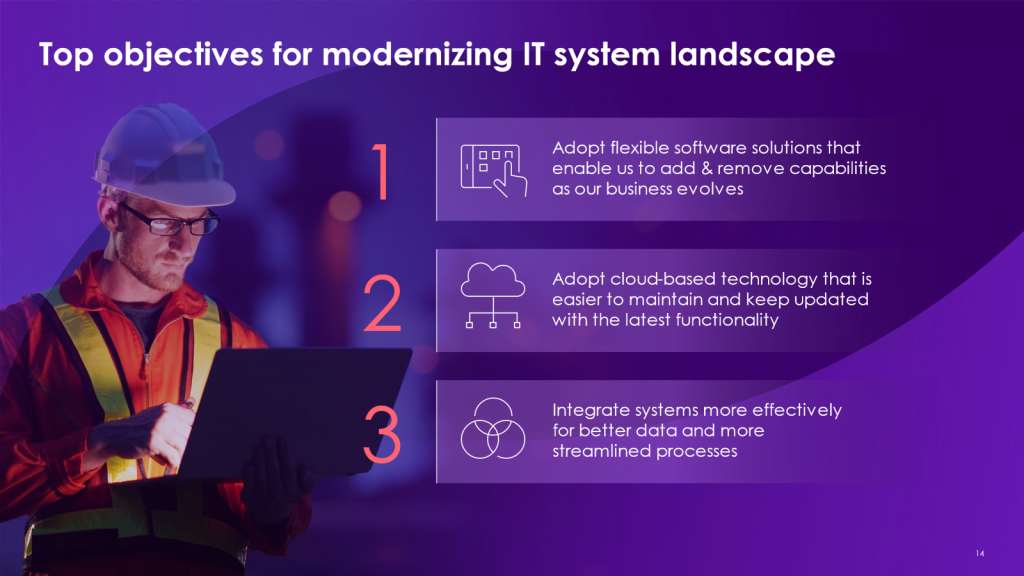
An astonishing 63% of the companies said they were looking to replace or invest in an ERP system for the first time in the next two years. Perhaps this provides evidence that the industry has woken up to the fact that having a solid digital ERP backbone is a critical foundation to enable their future success.

Most construction firms seek to reduce business system architecture so that going forward, costs are reduced, risk is minized, and their technology stack can easily integrate for business agiligity. This process will help businesses to quickly unlock value and Return on Investment if it is future-proof, with evergreen functionality updates), and user-friendly so that it can improve labor productivity and attract future skilled workers.
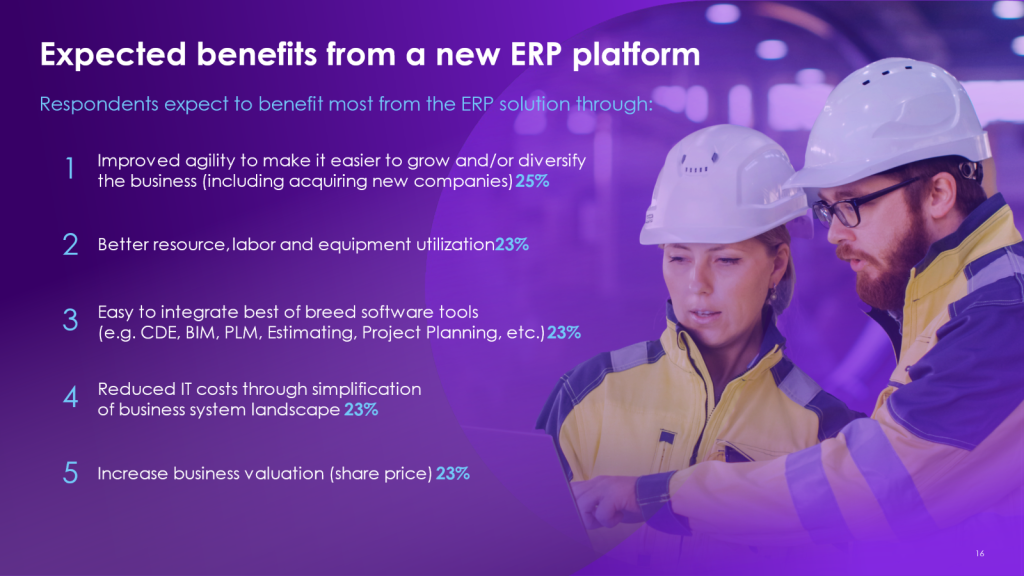
Top 5 long term initiatives

The need for a strategic mindset, with long term goals enabled through increasing digital maturity, is also clear. With the right solution, forward-thinking companies like McLaren can embrace new opportunities, revenue streams and business models, ensuring long-term success.