Digital Construction Week’s (DCW) 10th anniversary offered a powerful moment for reflection. Having chaired the main stage since its inception, I’ve witnessed a phenomenal evolution – not just in the scale and vibrancy of the event, but in the very fabric of our industry’s digital journey.
This year, I led a session entitled “Beyond the Tech: Realising Digital Value Through People & Change.”
Here are some of my key takeaways from that session along with my personal reflections on our journey over the past decade.
A Decade of DCW: Charting our industry’s digital ascent
Ten years ago, as Digital Construction Week first opened its doors, the dominant conversation revolved around BIM Level 2 – a foundational, yet then-novel, concept for many. The atmosphere was one of exploration, often grappling with the ‘what’ and ‘why’ of structured information. Fast forward to DCW 2025, and the landscape is unrecognisably richer and more complex. The main stage, and indeed the entire event, now buzzes with discussions spanning AI, digital twinning, advanced information management, geospatial integration, and critically, the pervasive theme – culture.
This growth mirrors our industry’s expanding capabilities and the increasing sophistication of the challenges we face. DCW has consistently served as more than just a conference; it’s a vital hub for learning, a platform for sharing both successes and setbacks, and an invaluable space for connection. It’s where theoretical concepts meet practical application, where innovators inspire, and where the collective ambition to build better is palpable. This sense of community is crucial. The challenges we face – from achieving net-zero to improving productivity and safety – are too vast for any single organisation to tackle alone. We need this connected ecosystem to truly shift the needle.
Beyond the tech
My session this year moved beyond the technology itself to explore the often-overlooked ‘how’: how do we ensure our digital investments genuinely deliver value? The premise was simple: technology alone won’t drive digital transformation. It requires a profound focus on human-centric design and intelligent change management. The interactive tabletop workshop format aimed to foster practical discussion and collaborative problem-solving.
Here are some key takeaways that emerged:
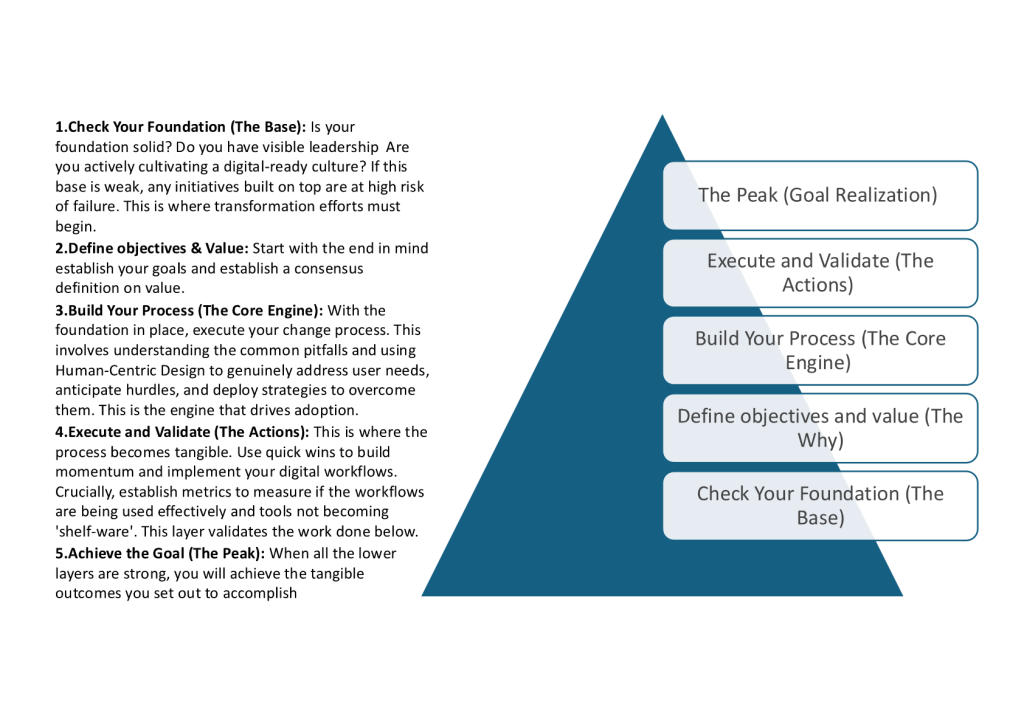
Agree on your definition of ‘digital value’
We started by collectively asking: what does ‘digital value’ truly mean in our construction context? The answers were refreshingly varied proving everyone has a different view on value definition: improved site safety, reduced rework and waste, enhanced collaboration across the supply chain, faster and more predictable project delivery, greater asset reliability, and ultimately, improved profitability and sustainability. Establishing this shared, concrete and harmonised understanding of desired outcomes is the essential first step before any tech deployment.
Watch out for the common pitfalls
Participants shared numerous anonymised examples of digital tools that, despite initial promise, failed to deliver expected value. The “missing ingredients” were almost universally non-technical: a lack of user involvement in selection, inadequate training, poor communication of benefits, processes that weren’t adapted to new tools, and a general disconnect between the technology and the day-to-day realities of its intended users. This powerfully reinforced that the ‘people’ and ‘process’ elements are not secondary considerations but primary drivers of success.
Prioritise human-centric design (HCD)
Moving from concept to practice, we explored how to apply HCD. It’s about genuinely understanding the needs, workflows, and pain points of all users – from site teams and office staff to clients and subcontractors – and involving them early and often in the selection, customisation, and implementation process. It’s about asking “How will this make your job easier, safer, or better?” rather than “Here’s a new tool you must use.”
Prepare for human reactions
The discussion on resistance to change was candid. Common hurdles included fear (of job loss, of looking incompetent), ingrained habits (“this is how we’ve always done it”), a lack of clarity on personal benefits (“what’s in it for me?”), perceived extra workload, and insufficient or poorly timed training. Acknowledging these very human reactions is key to addressing them.
Plan your strategies for overcoming hurdles
Our interactive brainstorm generated practical strategies. For instance, to counter the “we’ve always done it this way” mindset, suggestions included showcasing clear success stories from peers, providing dedicated ‘floor-walker’ support during initial rollout, and ensuring leadership visibly champions the new way of working. For skills gaps, phased training, mentorship programs, and creating safe spaces to learn were highlighted.
Cultivate a digital-ready culture
What does a culture that embraces digital change look and feel like? Participants described environments where curiosity is encouraged, experimentation (and learning from occasional failures) is accepted, communication is transparent, and successes are celebrated. Fostering this requires consistent effort, starting with clear leadership vision and empowering individuals at all levels.
Ensure visible leadership support
Visible, authentic leadership support is non-negotiable. This isn’t just about executive endorsement; it’s about site supervisors actively using and promoting new tools, and project managers allocating time for learning. Identifying and empowering passionate internal champions – those individuals who naturally ‘get it’ and can influence their peers – is a powerful catalyst for change.
Measure what matters
The conversation then turned to ensuring tools don’t just become ‘shelf-ware.’ How do we continuously measure if they are enhancing value? Suggestions included regular, informal feedback sessions with users, tracking specific KPIs linked to the initial value definition (e.g., reduction in RFIs, improved snagging times), and being agile enough to adapt or even decommission tools that aren’t working.
Celebrate quick wins to build momentum
We concluded by focusing on small, actionable steps. Ideas included simply asking a site team member about their biggest frustration with a current digital process, or a manager scheduling a 15-minute ‘digital debrief’ after a project phase to gather immediate feedback. These micro-actions build momentum.
The energy and shared insights from the session were a testament to the industry’s growing recognition that the human element is the linchpin of successful digital transformation. As we look towards the next decade of digital construction, let’s continue to learn, share, and connect, always remembering that technology serves people, and it’s through empowering our people that we will truly unlock its transformative value. See you all again in 2026!!

About the Author
Dave Philp is Chief Value Officer at Bentley Systems, Advisory Services. With a career dedicated to helping built environment organisations leverage technology to achieve their business objectives, I am passionate about the intersection of digital innovation, human potential, and tangible business value in the built environment.